A Window Seat or a Kitchen Table for Writing Down a Memory?
Compare a window seat and kitchen table for writing down a memory, and choose the setting whose comfort, interruptions, and cues help you recall details.
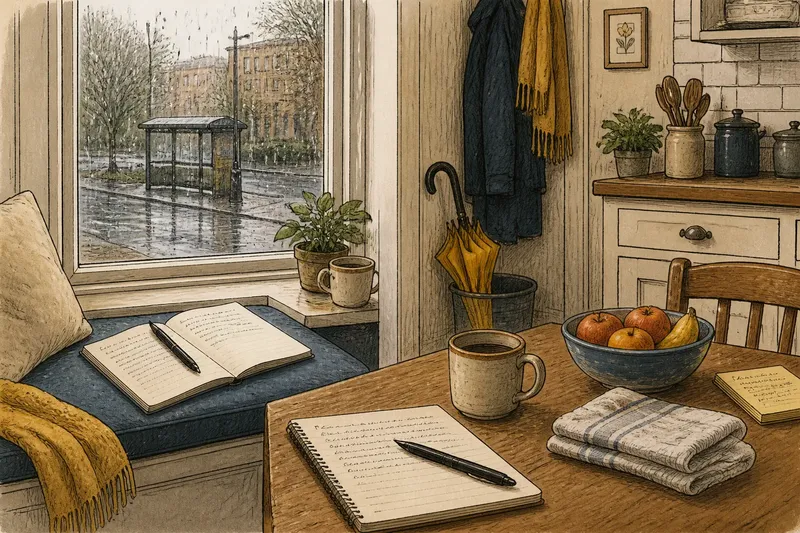
For writing down a memory, the choice between a window seat and a kitchen table often comes down to what you need around you: a little quiet, or familiar signs of everyday life. A window may invite you to pause over one detail; a table may bring the ordinary setting of the remembered moment close at hand. Neither place is automatically better. The useful question is which surroundings help you stay with the memory without pulling you away from it.
A window seat gives the eye somewhere to rest
A window seat can make a small memory-writing session feel contained. The frame of the window offers a natural boundary: you can look out, return to the page, and keep the task small. This may suit a recollection built around a glimpse, a change in light, or the way a place looked from indoors.
That view is also a cue, not just scenery. A wet sidewalk, a neighbor carrying groceries, or the shadow of a fire escape may call up a related detail without being part of the memory itself. If the new scene starts taking over, turn the chair or lower the shade so the window remains a quiet backdrop.
Comfort matters in practical ways. A cushion and a stable surface for a notebook can make it easier to write for a short stretch, while a narrow sill may leave your arm cramped or your pages sliding. Treat the seat like a book held open with a thumb: it should support the task without becoming the task.
Light can help you read your own handwriting and notice the page, but changing daylight may also draw your attention outward. If you keep stopping to watch movement beyond the glass, try sitting at an angle to the view. You do not have to make the room silent; it may be enough to keep the most active part of the scene out of your direct line of sight.
A kitchen table brings daily life into the frame
The kitchen table usually carries more visible traces of routine: a mug, a fruit bowl, a folded dish towel, or a chair someone often uses. Those objects can act as memory cues. A familiar cup may bring back a conversation, while the place setting may remind you who was present and where they sat.
This makes the table especially useful when the memory itself unfolded during an ordinary activity. Recalling a birthday cake being cut, a late breakfast, or a quiet conversation over tea may feel easier beside the kinds of objects that belong to those scenes. The setting does not have to match the remembered room exactly; familiar household details can still help you approach the texture of the moment.
The same table may be a busy passage through the day. A family member might leave a note, a phone might buzz beside the salt shaker, or someone may arrive expecting the space to be cleared. Before writing, decide whether you can borrow the table for a short while. Moving a few items to one side can mark a small writing space without turning the room into a formal studio.
Household cues can also lead away from the story. A grocery list might remind you of errands rather than the meal you meant to recall. If that happens, put the unrelated object out of sight and keep one item that belongs to the memory nearby. The aim is not to clear every surface; it is to choose which details get to speak first.
Choose the setting by the kind of memory you are approaching
Some memories arrive through a visual fragment: a curtain moving in a draft, a bus pulling away, or sunlight on a hallway floor. A window seat may support that kind of recollection because its view gives the eyes a place to pause. It can be less helpful if outside activity keeps replacing the scene you are trying to remember.
Other memories are anchored in shared routines and familiar objects. A kitchen table may make it easier to recall who reached for the bread, what sat between two people, or how the room sounded while everyone ate. But if the table is the household’s main work surface, the interruptions may outweigh those useful cues.
Try matching the place to the memory’s strongest doorway. Is it a view, a sound, an object, a person’s position, or the feeling of sitting in a familiar room? You do not need to recover every detail before you begin. Write the first clear fragment, then note what the setting brings up next, separating what belongs to the remembered moment from what you can currently see.
Make room for a short, focused session
- Choose one memory. Give it a small boundary, such as a particular visit or an ordinary afternoon, rather than asking yourself to write about a whole period of life.
- Set out only the tools you need. A notebook and pen may be enough. If you prefer typing, place the device where you can write without balancing it on your knees or shifting other household tasks around it.
- Keep one useful cue. At the window, that might be a view resembling the remembered one; at the table, it might be a cup or place mat associated with the scene. Let the cue prompt recall, not dictate what you must remember.
- Notice likely interruptions. If someone needs the kitchen table, choose a quieter moment or move to the window seat. If the window is beside a busy walkway, turn away from it or pick another spot.
- Write fragments before polishing. Record a sound, an object, a gesture, or a phrase as it comes. You can connect the pieces later, and a plain note is often easier to return to than a sentence you are trying to perfect on the spot.
- Leave a return point. End with a question about one missing detail, such as where a coat was hung or what happened after the meal. That gives your next writing session a specific place to begin.
Say you want to write about an invented memory of waiting with a cousin at a rainy bus stop after visiting a library. You sit at the kitchen table, move a grocery list aside, and notice a damp umbrella by the door; it brings back the sound of water tapping the shelter roof and your cousin’s bright yellow scarf. You jot those details without deciding yet whether the umbrella belonged in the remembered scene. The expected result is a short note with a few distinct cues to develop later, not a complete account created all at once.
Which place should you use when writing down a memory?
Is a window seat better for remembering visual details?
It may be a helpful choice when the memory begins with a view, a shift in light, or a scene observed from indoors. If the current view keeps taking your attention, change your angle or choose the table instead.
Does a kitchen table help with memories of family routines?
It can, because familiar household objects and seating arrangements may bring everyday scenes to mind. Keep the surface manageable and remove anything that repeatedly pulls your thoughts toward unrelated tasks.
What if neither place feels comfortable?
Try another ordinary spot where you can sit easily and keep a notebook within reach, such as a chair beside a bookshelf. The setting only needs to support attention; it does not need to resemble the place where the memory happened.
Should you use a photograph or object as a memory cue?
You can, if it brings up a detail without making you feel obliged to tell a particular version of the story. A small object or image can open a door, but your own notes should distinguish what you remember from what the cue suggests.
Let the place support the memory without taking it over
The window seat and kitchen table offer different kinds of company. One places a view nearby; the other surrounds you with traces of daily life. For writing down a memory, choose the place where comfort and useful cues outweigh distraction, then make a brief note before the moment slips back into the blur of the day.
If you are undecided, start where you already feel able to pause. Write one concrete detail, notice whether the room helps or interrupts, and move if it does not. A good place for memory writing is not the most picturesque corner; it is the one that lets you return to the page with your attention intact.